
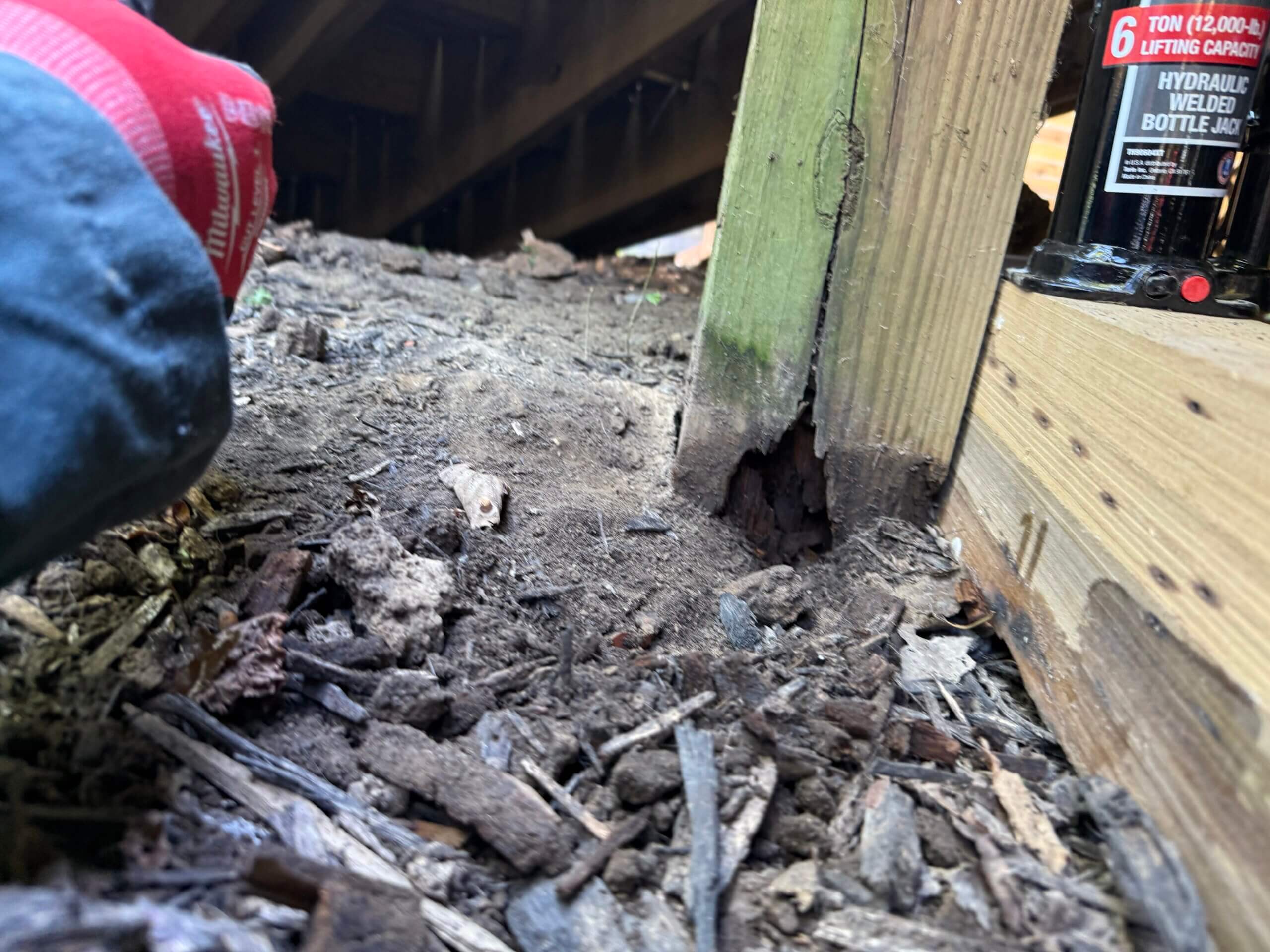
Wood in Contact with the Ground – Why It Matters
A common defect we note in inspection reports is wood in contact with the ground. This often shows up in the structural components of decks, stairs, and guardrails. While pressure-treated wood is designed to be more weather resistant, it is not immune to decay over time, especially when moisture and soil exposure are constant factors.
At my own home, we have an older deck that has served us well for years. Over the last eight years, we’ve kept it functional with routine maintenance—repairing rails, rebuilding steps, and cleaning the surface regularly. This year, however, we noticed the deck starting to sink slightly. Yesterday, I finally crawled under to investigate.
Once underneath, it was clear that one of the 6×6 posts had seriously decayed and was failing. Using a bottle jack (a tool I had only used once before to install an under-counter sink), I raised the front of the deck and confirmed the issue. What started as a plan to add an additional footer and column turned into replacing the failed post as well.
The repair will cost about $300 in materials and tools, along with 10–14 hours of my own labor. A temporary fix might have been easier, but investing in a proper repair means the deck will remain safe and usable until we’re ready for a full replacement in a few years. Tackling this myself saves the markup on labor and materials, but it also comes out of our annual home maintenance budget.
When you review your inspection report and see a note about wood in contact with the ground, it may not seem like an immediate concern. However, as this experience shows, it is an issue that should be monitored closely over time. Small signs of decay can eventually lead to major repairs, and being proactive will give you more options before replacement becomes the only solution.
For more updates and photos of our inspection work and home projects, follow Workflow Home on Facebook and Instagram.